
Peripheral Circulation
Peripheral Vascular Procedures
Specialist assessment and catheter-based care for selected narrowed or blocked arteries outside the heart.
Peripheral vascular evaluation focuses on symptoms, circulation, imaging and risk factors before angioplasty or stenting is considered.
- Circulation assessment
- Peripheral angioplasty
- Stenting when indicated
Service Overview
Restoring blood flow through an individualised plan
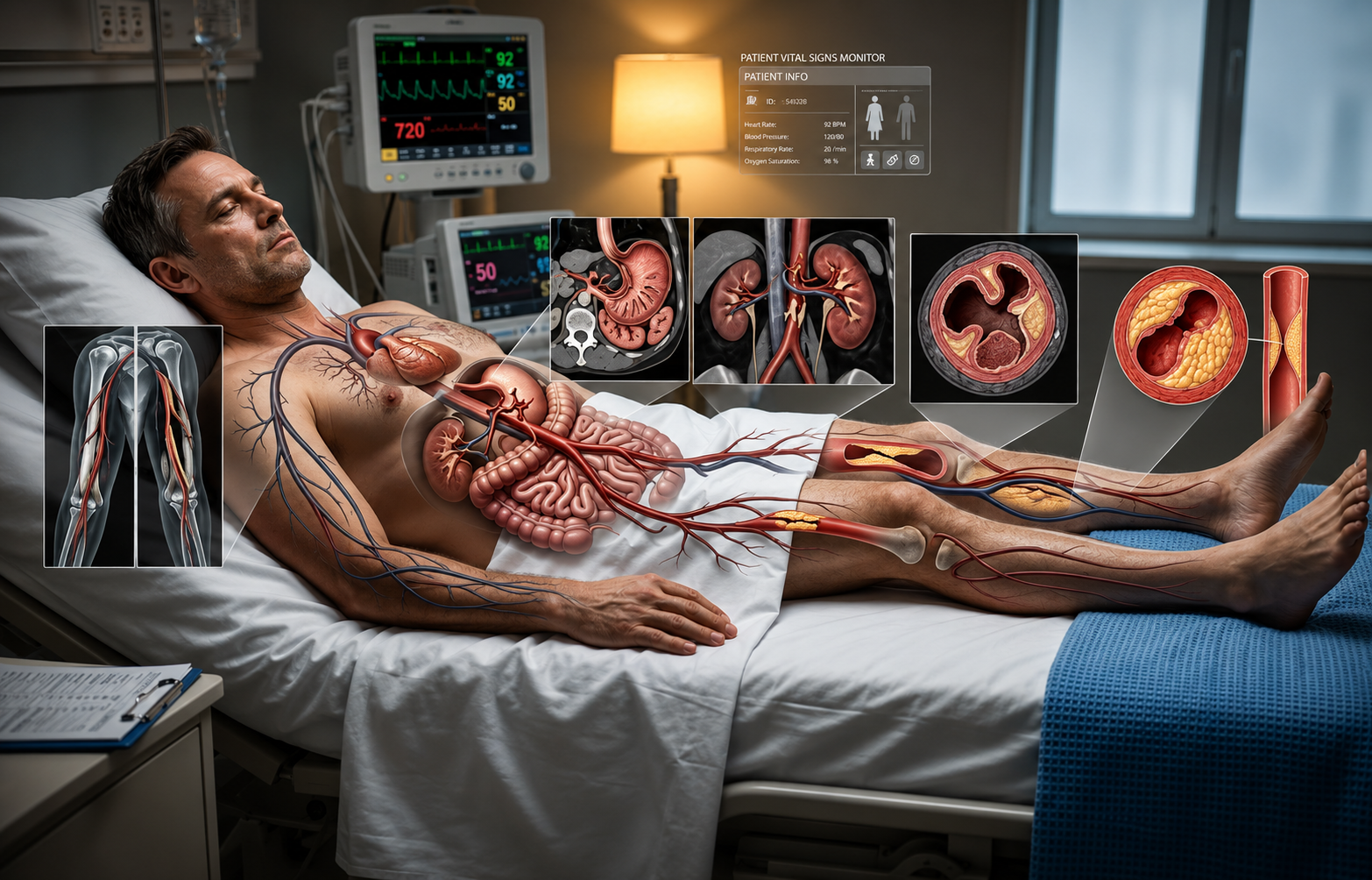
Peripheral artery disease can reduce blood flow to the limbs. Treatment may include risk-factor control, exercise, medicines or a procedure depending on symptoms and anatomy.
Vascular Assessment
Symptoms, pulses, skin changes and non-invasive vascular tests help identify reduced circulation.
Angiography
Vascular imaging may define the location and severity of narrowing when a procedure is being considered.
Angioplasty & Stenting
A balloon, and sometimes a stent, may be used to improve flow through a suitable narrowed artery.
When to Seek Review
Symptoms that deserve circulation assessment
These symptoms do not confirm peripheral artery disease, but they should be assessed—especially in people with diabetes, smoking history, high blood pressure, high cholesterol or known heart disease.
- Leg pain or cramping during walking that improves with rest
- Foot or leg wounds that heal slowly
- Coldness, colour change or reduced pulses in a limb
- Rest pain in the foot, especially at night
- Sudden limb pain, weakness, numbness or pallor
Care Pathway
A stepwise approach to peripheral vascular care
- 1
Clinical and pulse examination
Review walking symptoms, wounds, risk factors and limb circulation.
- 2
Non-invasive testing
Doppler or other vascular imaging may help define the affected arteries.
- 3
Treatment planning
Discuss exercise, medicines, risk-factor care and whether an intervention may help.
- 4
Procedure and follow-up
When performed, angioplasty or stenting is followed by wound, medicine and circulation review.
Frequently Asked Questions
Peripheral vascular FAQs
The best treatment depends on symptoms, anatomy and the risk to the limb.
Does every arterial narrowing need angioplasty?
No. Many patients are managed with exercise, medicines and risk-factor control. A procedure is considered when the expected benefit is appropriate for the individual.
What is peripheral angioplasty?
A catheter carries a balloon to the narrowed artery. Inflation widens the treated segment; a stent may be added when clinically indicated.
Why is smoking cessation important?
Smoking is a major modifiable vascular risk factor. Stopping supports circulation and reduces cardiovascular risk.
What follow-up may be needed?
Follow-up may include symptom review, pulse or wound assessment, medicines and repeat vascular testing when appropriate.
Specialist Consultation
Discuss circulation symptoms and reports
Consult Dr. Kondapaka Kiran Kumar at Sunrise Hospitals, Karimnagar.