
Heart Valve Care
Balloon Valvuloplasty
Catheter-based evaluation and treatment planning for selected narrowed heart valves.
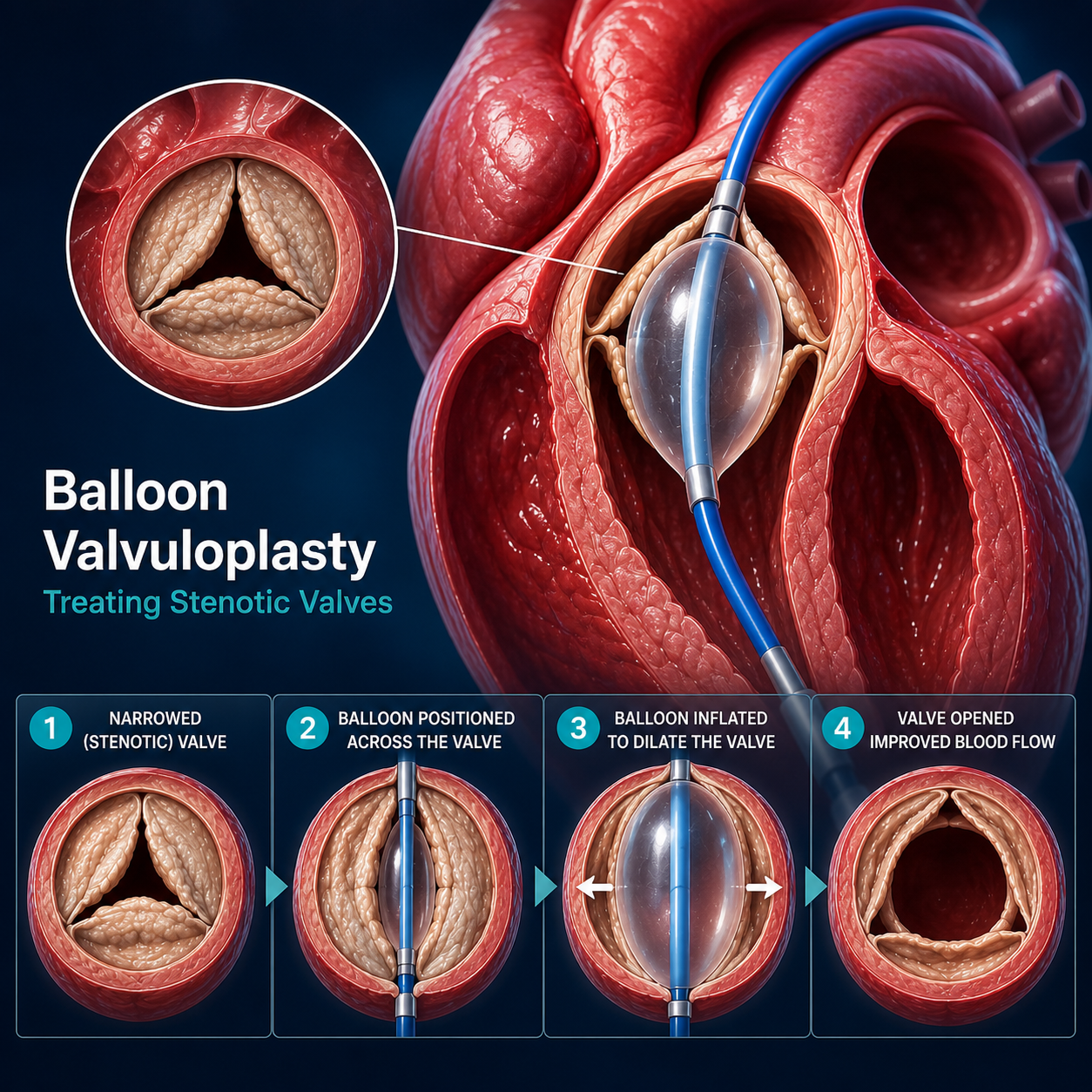
Balloon valvuloplasty uses an inflatable balloon to widen a narrowed valve. Suitability depends on the affected valve, symptoms, imaging findings and overall health.
- Valve-focused assessment
- Catheter-based balloon procedure
- Structured follow-up
Service Overview
Improving valve opening in selected patients
The procedure may be considered when valve narrowing restricts blood flow and the valve anatomy is suitable for balloon treatment.
Detailed Evaluation
Symptoms, examination, ECG and echocardiography help define the valve problem and its severity.
Balloon Dilatation
A balloon catheter is positioned across the narrowed valve and inflated to improve opening.
Follow-Up Imaging
Valve function, symptoms and recovery are reviewed after the procedure and over time.
Clinical Suitability
When a valve procedure may be discussed
Breathlessness, fatigue, chest discomfort, palpitations, dizziness or swelling may occur with valve disease, but these symptoms can have other causes. Echocardiography and specialist assessment are essential.
- Significant valve narrowing documented on imaging
- Symptoms that may relate to the affected valve
- Suitable valve structure and procedural access
- A clinical situation in which balloon treatment is an appropriate option
- A clear plan for medicines and follow-up after treatment
Care Pathway
From valve assessment to follow-up
- 1
Consultation and imaging
Review symptoms, examination findings and echocardiography results.
- 2
Suitability discussion
Explain expected goals, important risks, alternatives and hospital preparation.
- 3
Catheter procedure
Position and inflate the balloon across the valve under imaging guidance.
- 4
Monitoring and review
Assess symptoms, access-site recovery and valve function after treatment.
Frequently Asked Questions
Balloon valvuloplasty FAQs
Procedure details vary according to the valve and the patient’s health.
Is balloon valvuloplasty open-heart surgery?
No. It is a catheter-based procedure, usually performed through a blood vessel. It still requires hospital-based preparation and monitoring.
Is the result permanent?
The duration of benefit varies. Valve narrowing can recur, so scheduled follow-up and repeat imaging may be needed.
What tests are commonly reviewed first?
Echocardiography is central. ECG, blood tests and other imaging may also be reviewed according to the clinical situation.
How is the treatment decision made?
The decision is based on symptoms, severity, valve anatomy, procedural risk and available alternatives after discussion with the patient.
Specialist Consultation
Discuss your valve reports and symptoms
Consult Dr. Kondapaka Kiran Kumar at Sunrise Hospitals, Karimnagar.