
Interventional Cardiology
Coronary Interventions
Specialist evaluation and catheter-based treatment planning for narrowed or blocked coronary arteries.
Dr. Kondapaka Kiran Kumar reviews symptoms, cardiac test results and overall health before recommending angiography, angioplasty or another appropriate next step.
- Coronary angiography
- Angioplasty and stenting
- IVUS, OCT, IVL and rotablation support
Service Overview
A precise pathway from diagnosis to treatment
Coronary interventions use thin catheters to examine or treat arteries that supply blood to the heart. The right approach depends on symptoms, test findings and clinical urgency.
Coronary Angiography
Contrast imaging helps identify the location and severity of coronary narrowing and supports treatment decisions.
Angioplasty & Stenting
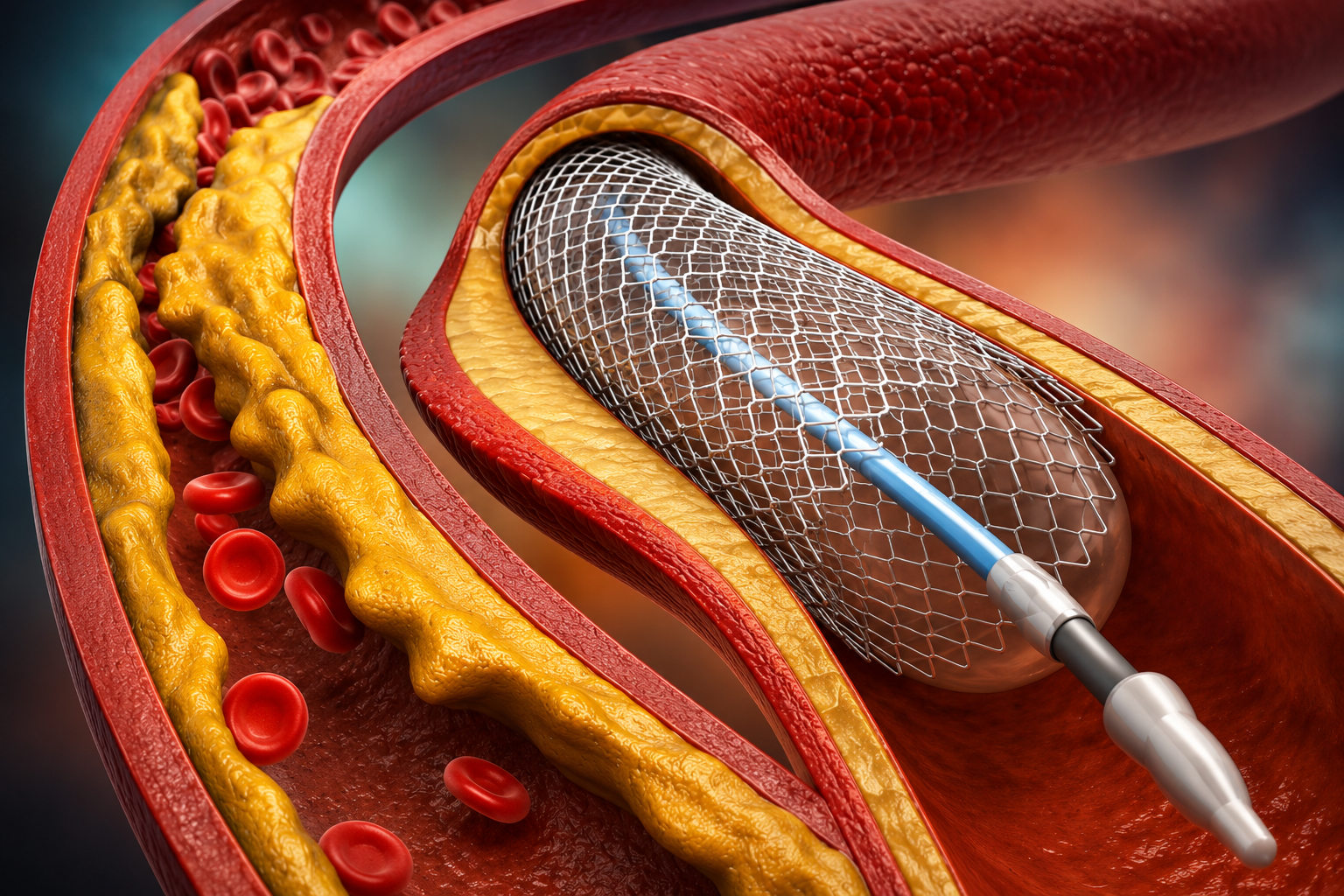
A balloon and, when appropriate, a stent may be used to improve blood flow through a narrowed artery.
Complex Procedure Support
IVUS, OCT, IVL or rotablation may support selected complex or calcified coronary procedures.
Clinical Assessment
When coronary evaluation may be considered
A consultation may be advised for symptoms or test findings that suggest reduced blood flow to the heart. An intervention is never automatic; available options and alternatives should be discussed first.
- Chest pressure, tightness or exertional discomfort
- Unexplained breathlessness or reduced exercise capacity
- Abnormal stress-test, CT coronary angiography or ECG findings
- Acute coronary syndrome or heart-attack assessment
- Known coronary disease with persistent symptoms despite medical care
Care Pathway
What the care process may include
- 1
Clinical review
Symptoms, risk factors, medicines and available reports are reviewed.
- 2
Diagnostic planning
The need for coronary angiography or another test is assessed and explained.
- 3
Treatment decision
Medical care, angioplasty, surgery referral or monitoring is discussed according to the findings.
- 4
Recovery and prevention
Medicines, activity, wound care, cholesterol control and follow-up are planned.
Frequently Asked Questions
Coronary intervention FAQs
Your exact preparation and recovery plan depends on the procedure and your medical condition.
Does an angiogram always lead to angioplasty?
No. The angiogram provides information. Treatment may be medicines, angioplasty, bypass-surgery evaluation or continued monitoring, depending on the findings.
What is a coronary stent?
A stent is a small mesh tube placed in a treated artery to help keep it open. Medicines after stenting are important and should not be stopped without medical advice.
How long does recovery take?
Recovery varies with the access site, procedure complexity and overall health. Individual instructions are provided before discharge.
Are IVUS or OCT needed for everyone?
No. These imaging tools are selected when detailed information inside the artery may improve assessment or procedural planning.
Specialist Consultation
Discuss the right next step for your heart
Consult Dr. Kondapaka Kiran Kumar at Sunrise Hospitals, Karimnagar.